There are no bad emotions — only stuck ones. These body-based practices help a feeling finish moving through you, gently and never past what you can hold. The body leads; the story can wait.
Before you start — go gently. Somatic work can stir up a lot. Always ground and resource first (below), take feelings in small doses, and stop the moment it's too much — that's not failure, that's the skill. If you have a trauma history, do the deeper practices with a trained somatic practitioner. This isn't therapy or a substitute for it. If you feel unsafe or in crisis, reach a person you trust or a crisis line.
Before you start — how loud is the feeling right now?
Optional — it just shows whether the practice shifted anything.
And now?
How is it now?
Naming the intensity and watching it change is itself regulation — affect labeling calms the alarm (Lieberman). Well-supported
Well-supported = backed by replicated randomized controlled trials, cited by name · Promising = smaller studies, mechanistic evidence, or a single trial not yet replicated · anecdotal = clinical or traditional report only, no controlled studies · Contested = evidence is mixed or actively disputed in the literature. These tiers are our reading of each method's evidence base, not a personal guarantee — ordered evidence-first; this atlas is psychoeducational, not a diagnostic or treatment tool.
Make a plan for next time
When I notice
,
I'll
.
An if-then plan roughly doubles follow-through — implementation intentions (Gollwitzer). Well-supported
Your plans
Saved on this device only. Each one is dated and can be removed any time.
Rate it above, try whichever practice below helps — one or several — then tap "How is it now?" when you're ready to check back in.
Always first
Ground & Resource
The anchor for everything else. Before touching a hard feeling, remind your nervous system that right now you're safe.
Orient — tell your body where you are
Tap each as you actually do it.
Find a resource
A place, person, animal, or memory that feels even slightly good or steady. You'll return here whenever a practice gets intense.
saved
Somatic Experiencing · the core practice
Ride the Wave
Pendulation: gently swing attention between the feeling and a calmer place, riding it like a wave until it settles. This is the 90-second "let it move" practice.
Ready when you are
~
You'll be guided through short prompts. Keep it small — a 3 out of 10, not a 9.
Floor Sequence · pelvic lift & tremor (TRE-style)
Floor Sequence — release through the hips
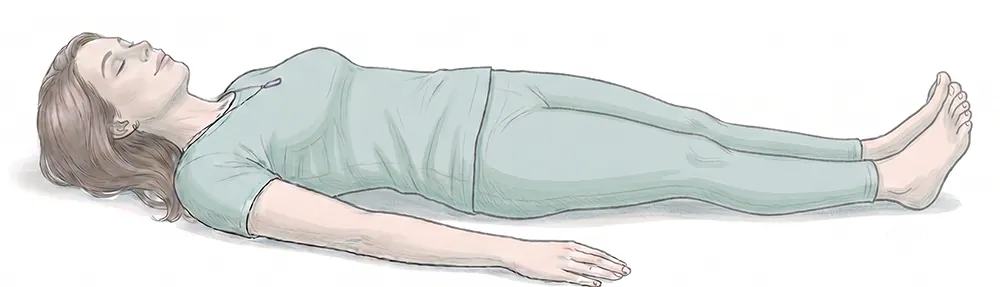
A gentle floor practice: settle on your back, open the hips in a butterfly, invite a soft natural tremor with small pelvic lifts, then rest. Let any shaking be its own — never forced.
Skip with pregnancy, recent back/hip injury, or serious health conditions without guidance. The tremor should feel neutral or relieving — if it's too much, straighten your legs flat on the floor and it stops.
Tension & Trauma Releasing Exercises (Berceli)
TRE — let the body tremor
A set of moves that fatigue the legs so the body starts its own natural, tension-releasing tremor. Preliminary and anecdotal evidence — start with just a couple of minutes.
Not during pregnancy, or with recent injury or serious health conditions, without professional guidance. The tremor should feel neutral or relieving — if it feels overwhelming, straighten your legs, put your feet flat, and it stops.
Consciously Connected Breathing (Brown)
Connected Breathing
A continuous, circular breath — no pause between the inhale and the exhale — that lets held feeling surface and pass. Support is mostly experiential rather than trial-tested, so treat it as an experiment and go gently.
Skip or seek guidance if you have cardiac issues, a seizure history, or are pregnant. Lie down, and if you feel faint, tingly, or panicky, return to normal breathing — that's your cue to stop.
Before you begin: lie down, settle, and name — even silently — what you'd like to let move. Connected breathing is a release practice, not just breathing: held emotion can surface. Let it come and go like weather, keep it a 3-out-of-10 rather than a 9, and use Pause, Stop, or Ground me any time. When you're done, rest a minute and let it integrate.
relaxed & open
Breathe in and out through the mouth in one smooth loop, no holding. Follow the circle.
Length:
Interoception
Body Scan
Slowly move attention through the body, noticing sensation without trying to change it. This builds the awareness every other practice here relies on.
Settle in
Ready
~
Sit or lie comfortably. We'll pause a few seconds at each area.
Body-based practices for emotional processing. Educational, not a substitute for trauma-informed therapy.
🌱 Feeling flooded? Ground me
Let's slow the system down.
A physiological sigh — two breaths in through the nose, one long breath out. The fastest way to settle.
Questions people ask
Is somatic work safe if I have a trauma history?
Do the deeper practices — TRE, Connected Breathing, Floor Sequence — with a trained somatic practitioner rather than solo if you have a trauma history. This page isn't therapy or a substitute for it; ground and resource first, take feelings in small doses, and stop the moment it's too much.
What does "interoception" mean, and is tuning into body sensation always a good idea?
Interoception is sensing what's happening inside your own body — the Body Scan is built to train it. For most people that's genuinely useful, but after trauma, turning attention inward can sometimes intensify distress rather than settle it. If a body scan or any practice here makes things feel worse or unreal, stop and ground first (orient to the room, name what you see) rather than pushing through.
What if a practice brings up more than expected?
Stop — that's the skill, not a failure. Use Ground & Resource, return to your saved resource, or reach a person you trust or a crisis line if it tips into feeling unsafe.
Where are my saved resources and Ground & Resource entries stored?
In this browser only — nothing is sent anywhere. Use Export to keep a copy elsewhere before clearing your browser data, since that deletes them for good.
How do I know if a tremor (TRE) or connected breathing session is going too far?
The tremor should feel neutral or relieving — if it feels overwhelming, straighten your legs and put your feet flat, and it stops. For connected breathing, feeling faint, tingly, or panicky is your cue to return to normal breathing immediately.
TRE (tension & trauma releasing exercises) is David Berceli's. TRE — Berceli.
The safety-cue framing draws on Stephen Porges's Polyvagal Theory; the connected-breathing cue on Andrew Huberman's breathwork material (popular, best cross-checked).